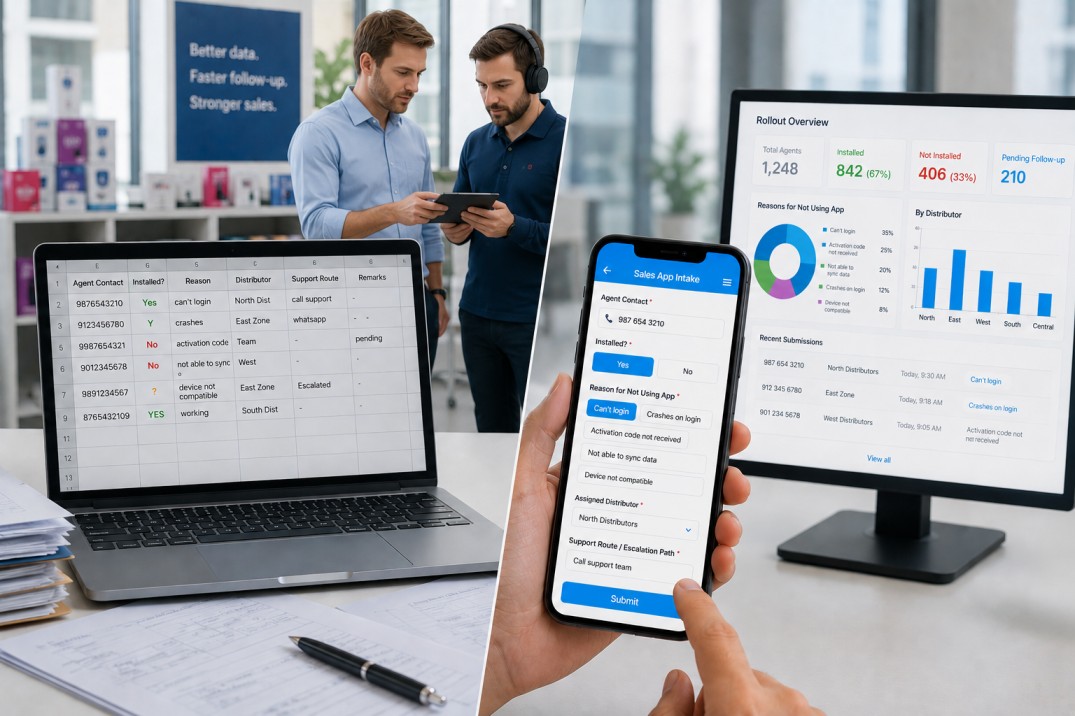


Route planning software is a digital solution that helps businesses create optimal routes for deliveries, field service visits, or multi-stop trips by calculating the most efficient paths based on distance, time, traffic conditions, and business constraints. Tracking software provides real-time GPS monitoring of vehicles, drivers, and field teams, enabling businesses to see exact locations, monitor progress, and ensure accountability throughout operations.
Modern logistics, delivery, and field service companies depend on route planning software and tracking software to replace manual route creation, eliminate inefficient driving patterns, reduce fuel costs, improve on-time performance, and gain complete visibility into field operations. Whether you're managing a delivery fleet, coordinating field technicians, or optimizing sales routes, the right route optimization and tracking solutions streamline your entire operation.
Traditional manual route planning creates serious operational problems—wasted time planning routes each morning, drivers taking inefficient paths, excessive fuel consumption, late deliveries and missed appointments, lack of visibility into field team locations, and difficulty responding to changes. Route planning software with integrated tracking capabilities solves these challenges by automating route creation, providing turn-by-turn navigation, monitoring real-time progress, and enabling dynamic route adjustments.
The best route planning and tracking software provides features like multi-stop route optimization, real-time GPS tracking, automated dispatch management, delivery proof of delivery, customer notifications, comprehensive analytics, and mobile apps for drivers. These capabilities transform how businesses manage field operations and fleet efficiency.
When users search for "route planning software" or "tracking software," their intent reveals specific operational challenges they need to solve.
Business owners need route planning software that automatically calculates the most efficient sequence of stops, minimizing total distance traveled and time spent on the road. Manual route planning wastes 2-4 hours daily and creates suboptimal routes that cross over themselves, backtrack unnecessarily, and ignore traffic patterns.
Route optimization algorithms consider multiple factors simultaneously—customer locations and addresses, time window requirements for deliveries, vehicle capacities and load constraints, driver shift schedules and availability, real-time traffic conditions, and historical delivery data. Advanced route planning software can plan hundreds or thousands of stops across multiple vehicles in seconds, something impossible with manual methods.
Optimized routes reduce fuel consumption by 15-30%, enable completing more stops per day, decrease vehicle wear and tear, improve on-time delivery rates, and lower overall operational costs. The software ensures every route makes logical sense from a driving perspective.
Managers need tracking software that shows where every vehicle and field employee is at any moment. Real-time GPS tracking provides instant visibility into field operations with live location updates, route progress monitoring, geofencing alerts when vehicles enter or exit areas, and historical route playback for analysis.
GPS tracking software captures location coordinates, timestamps, speed data, and route paths, creating complete audit trails of field activity. This visibility enables better dispatching decisions, faster response to customer requests, accountability for field teams, and proof of service completion.
Real-time tracking also improves customer service through accurate ETA updates, proactive delay notifications, and transparent delivery tracking. Customers can see exactly when their delivery or service visit will occur.
Rising fuel costs make route optimization critical for profitability. Route planning software reduces fuel consumption through shorter total distances driven, optimized route sequencing that minimizes zigzagging, consideration of traffic to avoid idle time, grouping of nearby stops, and elimination of backtracking.
Fuel savings directly impact bottom-line profits. A delivery company with 20 vehicles driving 100 miles daily can save $50,000-100,000 annually through 20-25% route optimization improvements. Fleet tracking software also identifies wasteful behaviors like excessive idling, aggressive driving, and unauthorized vehicle use.
Late deliveries damage customer relationships and business reputation. Route planning software with time window management ensures deliveries arrive when promised through accurate ETA calculations, priority sequencing for urgent deliveries, buffer time allocation for unexpected delays, and dynamic rerouting when issues arise.
Tracking software provides real-time updates to customers showing live delivery status, estimated arrival times, and automatic notifications when deliveries are completed. Transparency and reliability improve customer satisfaction and reduce support inquiries.
Without tracking software, managers have no idea what's happening in the field—whether drivers are following planned routes, how much time is spent at each stop, why certain deliveries take longer than expected, or what causes delays. Route tracking software provides comprehensive operational visibility including stop-by-stop completion tracking, time spent at each location, deviations from planned routes, productivity metrics per driver, and exception alerts for issues.
This visibility enables data-driven management decisions, performance coaching opportunities, capacity planning accuracy, and continuous operational improvement. Managers can identify top performers and struggling team members.
Many businesses still use spreadsheets, printed maps, or mental calculations for route planning, leading to hours of wasted planning time, inconsistent route quality, inability to handle changes quickly, no optimization or efficiency gains, and no integration with other systems.
Cloud-based route planning software eliminates spreadsheet dependency while providing superior route optimization, automated dispatch, real-time updates, performance analytics, and mobile driver apps. The system becomes the single source of truth for all route and tracking data.
Understanding critical features helps businesses select solutions that meet operational requirements.
The core capability of route planning software is optimizing the order of multiple stops to minimize total travel time and distance. Advanced algorithms consider geographical clustering of stops, time window constraints, vehicle capacity limits, driver availability and skills, service time requirements at each stop, and traffic patterns throughout the day.
Route optimization should handle both daily route planning for changing stop lists and recurring route management for regular delivery schedules. The software should allow manual adjustments while suggesting optimized alternatives.
Tracking software uses GPS technology to show vehicle and driver locations on live maps updated every few seconds. Essential GPS tracking features include real-time position updates with lat/long coordinates, breadcrumb trails showing complete route history, geofence alerts when entering or exiting designated areas, speed monitoring and alerts for unsafe driving, and historical playback of completed routes.
Live tracking enables dispatchers to monitor field operations continuously, answer customer location inquiries instantly, redirect drivers to urgent stops, and verify service completion through location data.
Route planning software must provide mobile applications for iOS and Android that drivers actually want to use. Driver app features include clear route displays with all stop information, turn-by-turn navigation integration (Google Maps, Waze, Apple Maps), one-tap actions for stop completion, photo capture for proof of delivery, digital signature collection, customer notes and delivery instructions, and offline functionality when connectivity is limited.
User-friendly mobile apps ensure driver adoption and compliance with planned routes. Drivers should be able to see their entire route, understand priorities, and navigate efficiently without constant dispatcher communication.
Dispatch features automate assigning routes to drivers based on skill sets, vehicle types, geographical zones, workload balancing, and availability. Automated dispatch management includes drag-and-drop route assignment interfaces, automatic load balancing across drivers, consideration of driver preferences and territories, notification to drivers when routes are assigned, and ability to reassign stops dynamically during the day.
Efficient dispatch reduces planning time from hours to minutes and ensures optimal resource utilization across the fleet.
Many deliveries and service visits must occur within specific time windows. Route planning software with time window management ensures appointments are honored through optimization that respects customer time preferences, scheduling that prevents overbooking, early/late alerts before time window violations, and priority handling for urgent deliveries.
Time window compliance protects customer satisfaction and meets service level agreements. The software should clearly show when time windows cannot be met so dispatchers can communicate proactively.
Tracking software should capture proof that deliveries occurred including customer signature collection via touchscreen, photo documentation of delivered packages or completed work, barcode or QR code scanning for package verification, timestamp and GPS coordinates of completion, and customer feedback or rating collection.
Digital proof of delivery eliminates paper forms, provides legal documentation, resolves disputed deliveries, and creates audit trails for compliance.
Modern customers expect transparency throughout the delivery process. Route planning and tracking software should provide automated notifications via SMS, email, or push notification when delivery is out for delivery, estimated arrival time updates, real-time tracking links showing driver location, and delivery completion confirmations with proof.
Customer-facing tracking portals reduce "where is my order" inquiries and improve the overall delivery experience. Proactive communication prevents missed deliveries and increases first-attempt success rates.
Delivery businesses need route planning software that considers vehicle capacity constraints including weight limits, volume or cubic space restrictions, special handling requirements, and multi-compartment configurations. Load optimization features ensure vehicles are loaded efficiently, routes don't exceed capacity, high-priority items are accessible, and delivery sequences match loading order.
Capacity-aware routing prevents overloaded vehicles, reduces the number of trips required, and improves delivery efficiency.
Route planning software should integrate real-time traffic data to avoid congestion, construction, and accidents. Dynamic routing capabilities include automatic rerouting around traffic delays, consideration of historical traffic patterns by time of day, alerts about road closures affecting planned routes, and ETA updates based on current conditions.
Traffic-aware routing prevents late deliveries and reduces time wasted in congestion.
Comprehensive reporting transforms route and tracking data into operational insights. Essential reports and dashboards include routes completed versus planned, total miles driven per vehicle and driver, fuel consumption and costs, on-time delivery percentages, time spent at stops versus driving, driver productivity and efficiency metrics, customer service success rates, and cost per delivery or stop calculations.
Analytics enable continuous improvement through data-driven decisions about route territories, driver assignments, vehicle utilization, and operational processes.
Route planning and tracking software should connect with existing business systems including order management and e-commerce platforms for automatic stop creation, accounting and invoicing software for billing, CRM systems for customer communication, inventory management for stock tracking, and telematics systems for vehicle health monitoring.
API integrations and data synchronization eliminate duplicate data entry and create unified business workflows.
Field operations often encounter areas with poor cellular connectivity. Mobile tracking apps must support offline operation including route data cached on device, ability to mark stops complete without internet, photo and signature capture offline, and automatic synchronization when connectivity returns.
Offline capability ensures operations continue smoothly regardless of network availability.
Different industries have unique routing and tracking requirements that specialized solutions address.
Delivery companies and courier services require route planning software that handles high stop density, tight time windows, real-time route changes, proof of delivery capture, and customer tracking. Last-mile delivery is the most expensive segment of shipping, making route optimization critical for profitability.
Courier tracking software enables real-time visibility for customers and senders, automated status updates, signature capture, and delivery confirmation with photos.
HVAC, plumbing, electrical, and other field service businesses need route planning software that schedules appointments, assigns technicians based on skills and certifications, provides customer history and job details, captures service completion documentation, and handles emergency service requests.
Field service tracking software ensures technicians arrive on time, have the right parts and information, and complete jobs efficiently.
Restaurant delivery and food service businesses require route planning software optimized for very short delivery windows, temperature-sensitive products, frequent order changes throughout service periods, integration with point-of-sale systems, and driver payment calculations including tips.
Real-time tracking enables restaurants to monitor delivery performance and provide accurate customer ETAs.
Outside sales representatives need route planning software that organizes customer visits by territory, prioritizes high-value accounts, provides CRM integration, plans most efficient daily routes, and tracks mileage for reimbursement.
Sales route tracking software helps representatives visit more customers per day while reducing travel time and costs.
Home healthcare, visiting nurses, and caregivers need route planning software with patient appointment scheduling, caregiver skill matching, medication schedule integration, visit duration tracking, and HIPAA-compliant data handling.
Healthcare tracking software documents all patient interactions with timestamps and GPS verification for compliance and billing.
Construction companies, contractors, and tradespeople need route planning software that schedules job site visits, coordinates crew assignments, tracks equipment locations, manages material delivery, and documents site progress with photos.
Contractor tracking software provides job costing data, time on site tracking, and progress verification for project management.
Waste collection, recycling, and utility services need route planning software for recurring routes on fixed schedules, zone-based service areas, missed pickup handling, heavy vehicle navigation, and compliance documentation.
Waste management tracking software verifies service completion, monitors route adherence, and provides proof of collection.
While commercial route planning software offers ready-made solutions, building a custom route planning and tracking system with Clappia provides complete flexibility to match your exact operational processes, unique business requirements, and specific workflow needs—all without writing code.
Clappia's no-code platform enables you to create fully customized route planning and tracking software in days, not months. You control every aspect of route creation, driver assignment, location tracking, reporting, and integrations while maintaining the simplicity your team needs for daily operations.
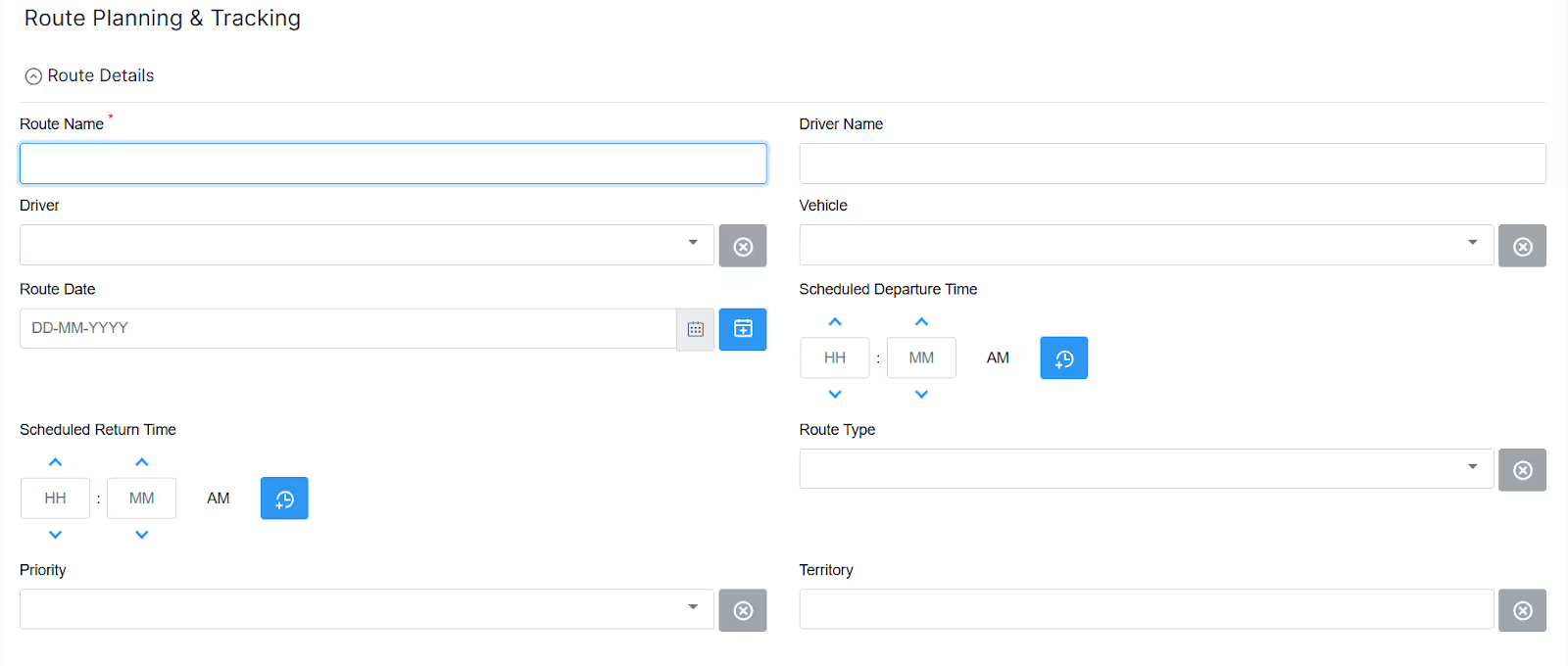
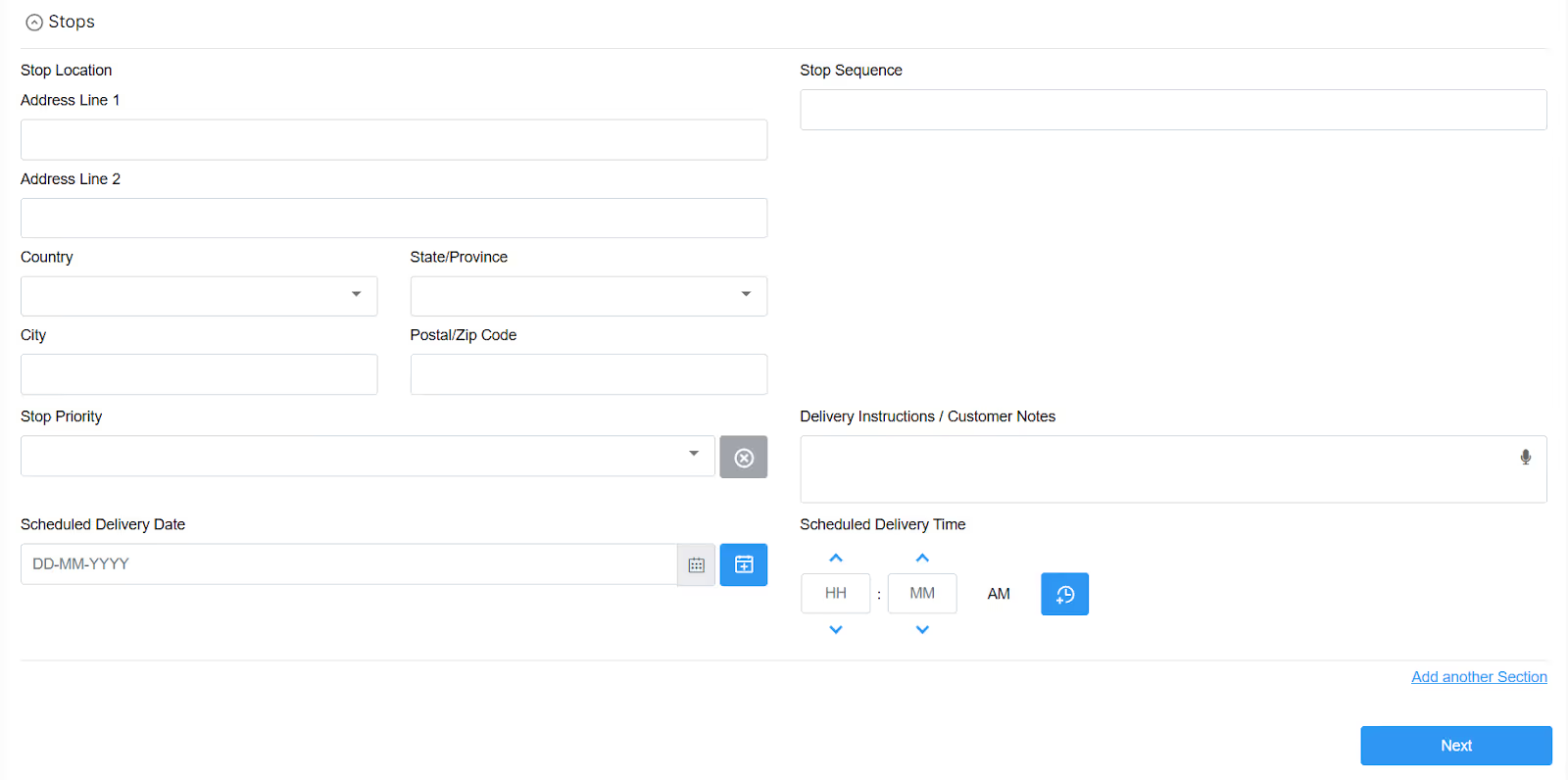
Start by designing a route planning form in Clappia's app designer that captures all necessary route information. Use pre-built blocks to add fields: Single Line Text for route names and driver names, Date Selector and Time Selector for scheduled departure and delivery times, Address fields with geo-address lookup for stop locations, Drop Down selectors for choosing vehicles and drivers, Number Input blocks for stop sequences and priorities, and Multi-Line Text for delivery instructions and customer notes.
For businesses managing recurring routes, create templates that can be reused and modified as needed. Multiple Selector blocks allow assigning multiple stops to a single route.
The Tags block helps categorize routes by type (delivery, service, pickup), priority (urgent, standard, scheduled), or territory (north, south, commercial, residential).
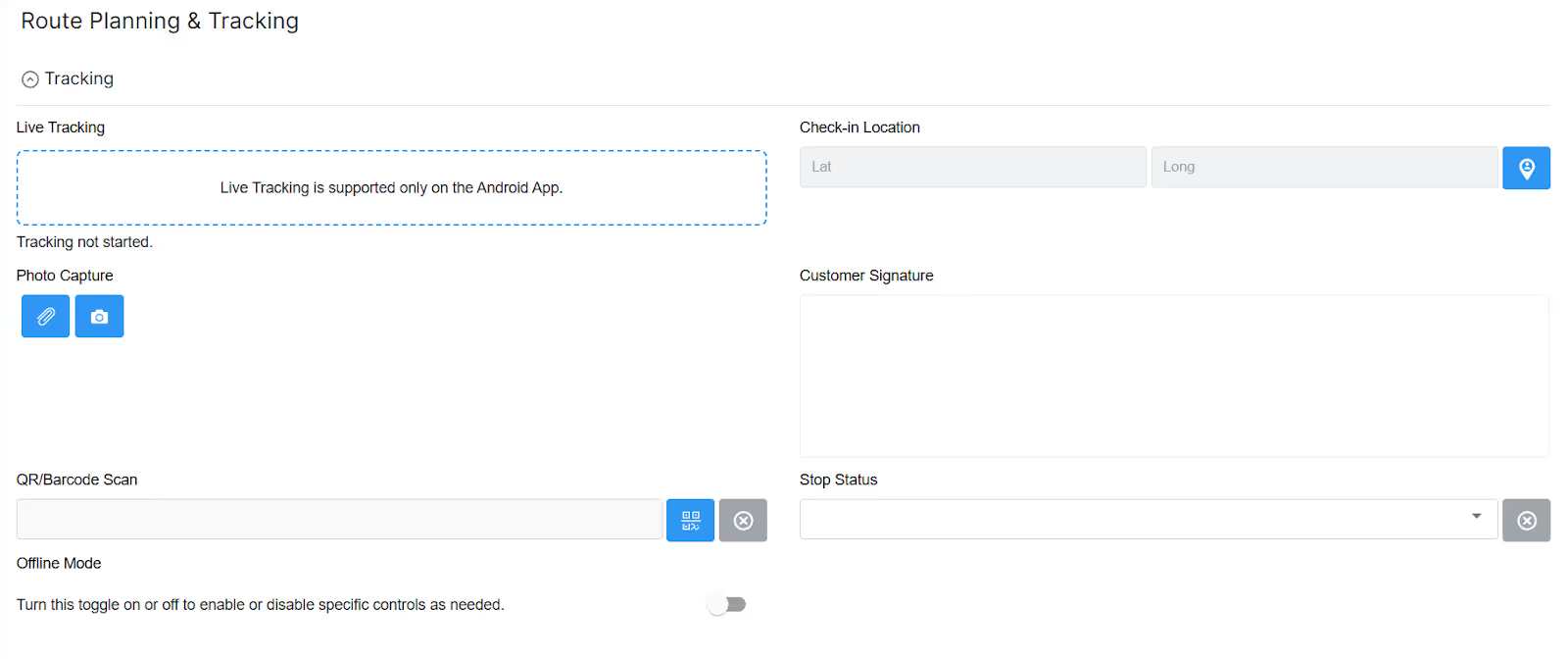
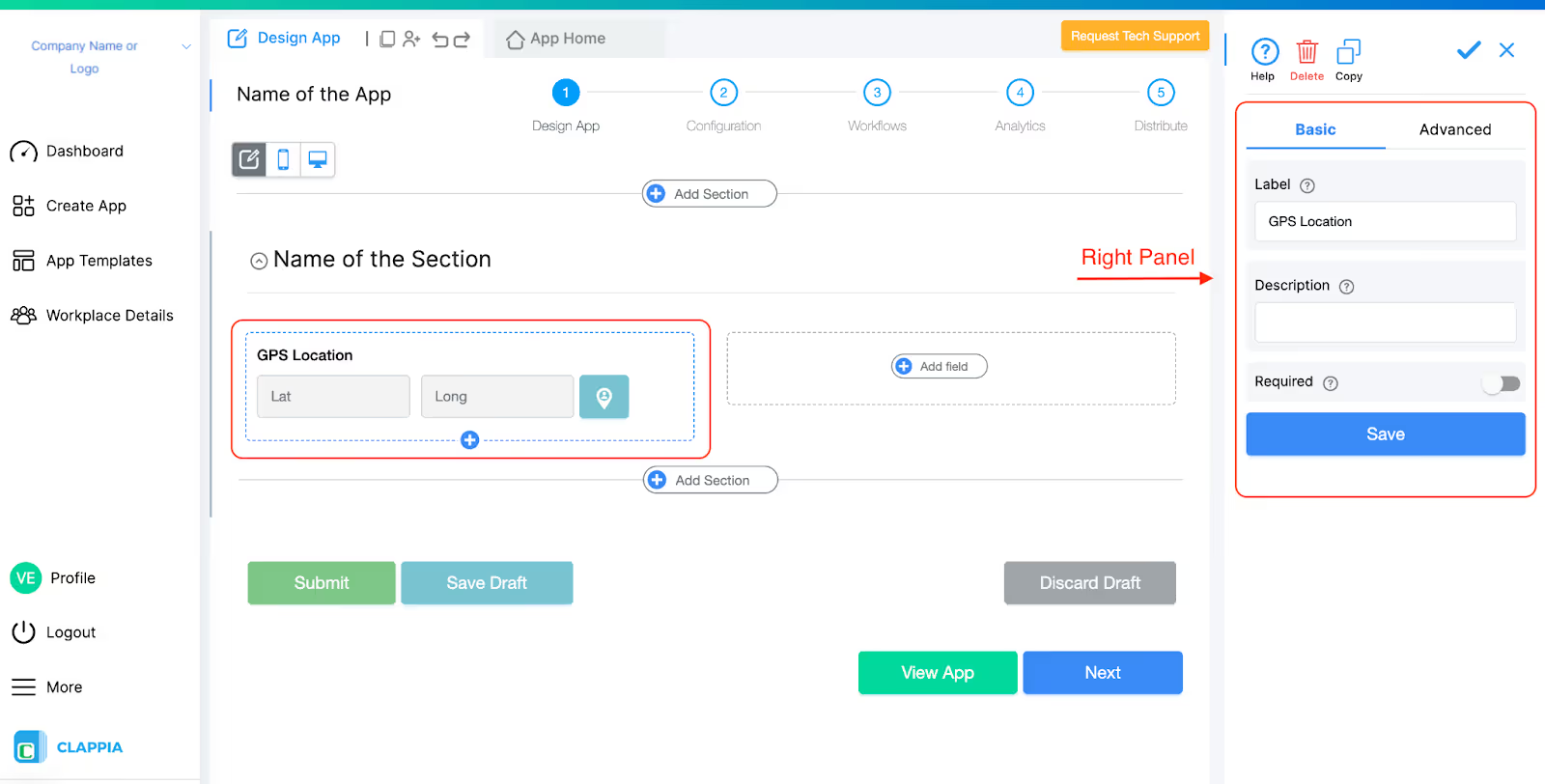
Implement comprehensive location tracking using Clappia's powerful location blocks. The GPS Location block automatically captures precise GPS coordinates when drivers check in at stops, providing latitude and longitude data, address verification, timestamp of capture, and geofencing capabilities to ensure drivers are actually at locations.
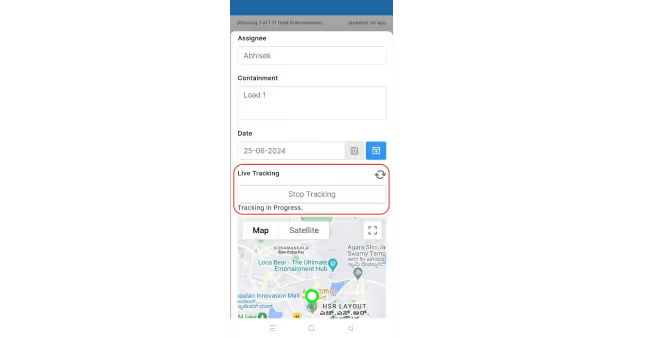
For continuous route monitoring, the Live Tracking block provides real-time route visualization with live GPS breadcrumb trails showing complete journey paths, distance and time calculations for routes traveled, speed monitoring throughout trips, and replay functionality to review historical routes.
Live tracking enables dispatchers and managers to see exactly where every driver is on a live map, monitor route progress in real-time, identify deviations from planned routes, and respond quickly to customer inquiries about delivery status.
Configure geofencing alerts that trigger automatic notifications when drivers enter or exit designated service areas, ensuring compliance with assigned territories and detecting unauthorized stops.
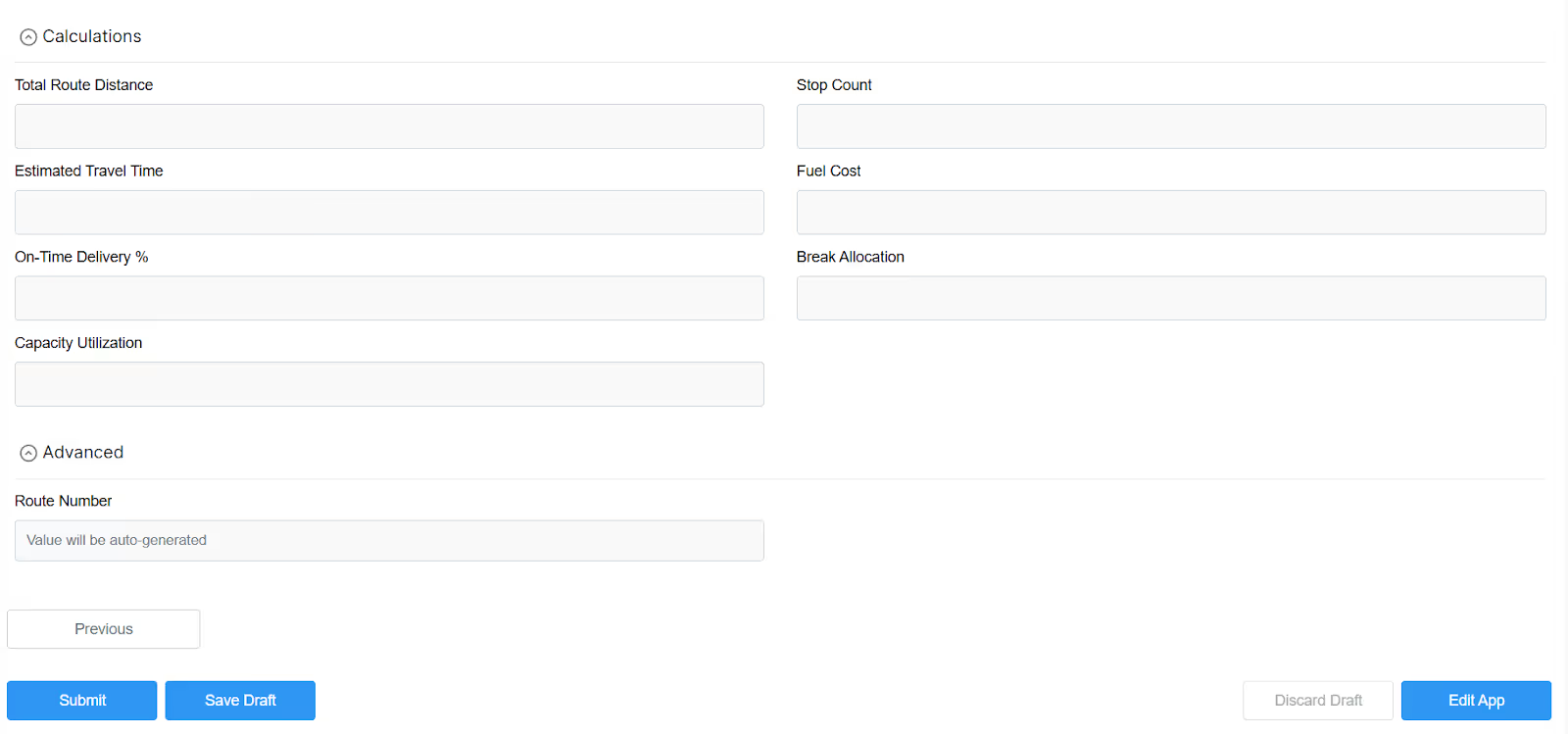
Use Clappia's Formula Block to automate route calculations. Excel-like formulas handle complex logistics math automatically, including total distance calculations across all stops, estimated travel time based on average speeds, fuel cost estimations using consumption rates, stop sequence optimization suggestions, and delivery time window compliance checking.
Formula blocks update calculations in real-time as routes are planned or stops are added, providing instant feedback on route efficiency and feasibility. Create formulas for different vehicle types, traffic patterns, and service time requirements specific to your operations.
Advanced calculations might include driver break time allocation, multi-route comparison for cost analysis, capacity utilization across fleet, or penalty calculations for late deliveries.
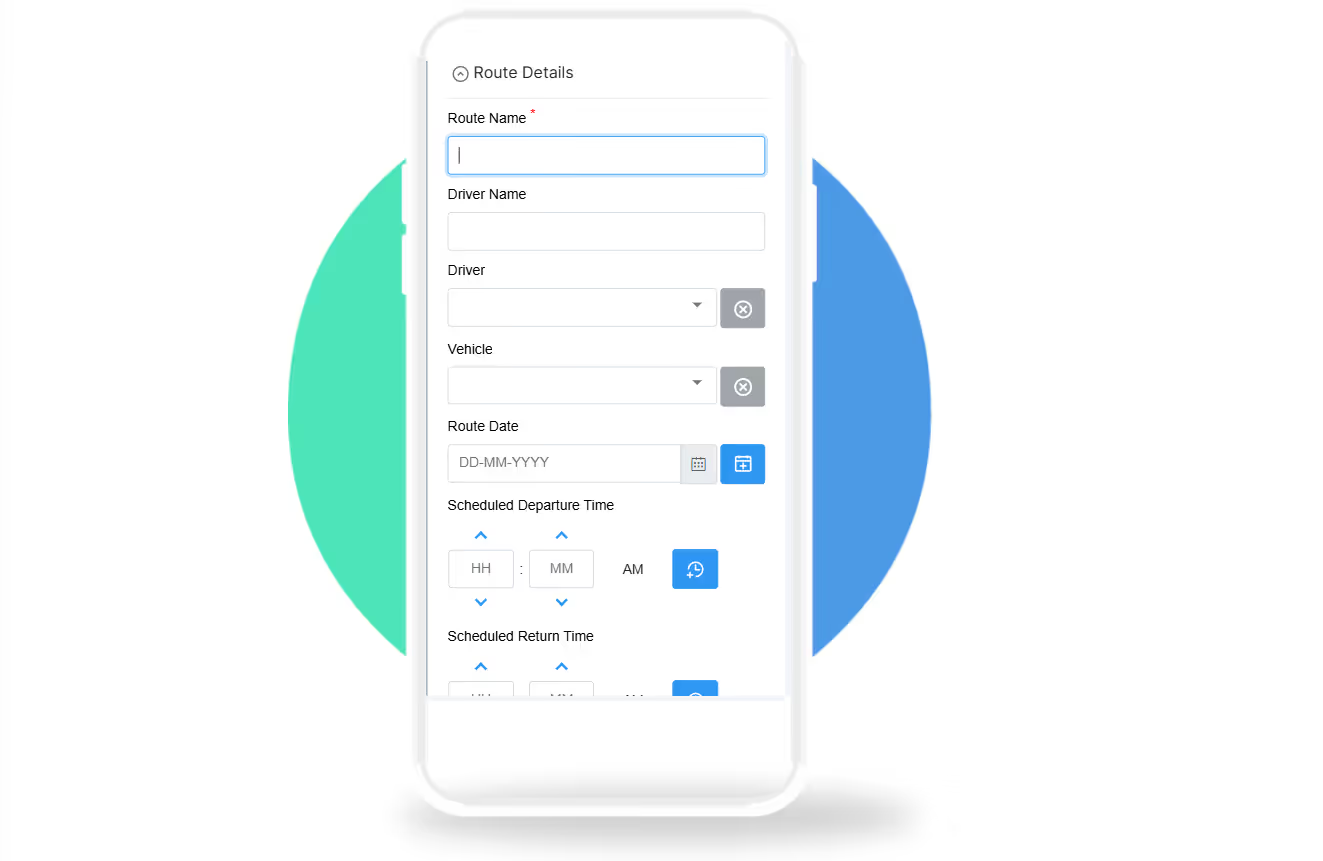
Your custom route planning app works automatically on Clappia's mobile app for iOS and Android. Drivers access their assigned routes from mobile devices with full stop lists and instructions, turn-by-turn navigation integration with Google Maps or Waze, one-tap buttons to mark stops complete, and real-time status updates visible to dispatchers.
Mobile tracking capabilities include live location sharing throughout routes, Camera and File Upload for photo proof of delivery, Signature capture for customer authorization, QR code or barcode scanning for package verification, and offline operation in areas with poor connectivity through offline mode.
For businesses wanting branded mobile experiences, create white-labeled apps with your company logo and name published to the App Store and Google Play Store. Drivers and customers see your brand rather than Clappia's platform.
Create intelligent workflow automation that manages the entire route lifecycle. Configure workflows to automatically assign routes to drivers based on availability, territory, or vehicle type, send email notifications to drivers when new routes are assigned, alert dispatchers when routes start or finish, notify customers of delivery status changes, and escalate delays or issues to management.
WhatsApp integration sends instant delivery updates to customers through their preferred messaging channel. SMS notifications alert drivers about urgent route changes or last-minute stops. Slack integration posts route completions and exceptions to team channels for real-time visibility.
Conditional workflow logic enables dynamic routing where high-priority deliveries automatically move to the front of routes, late drivers trigger supervisor alerts, or completed stops automatically notify the next customer in sequence.
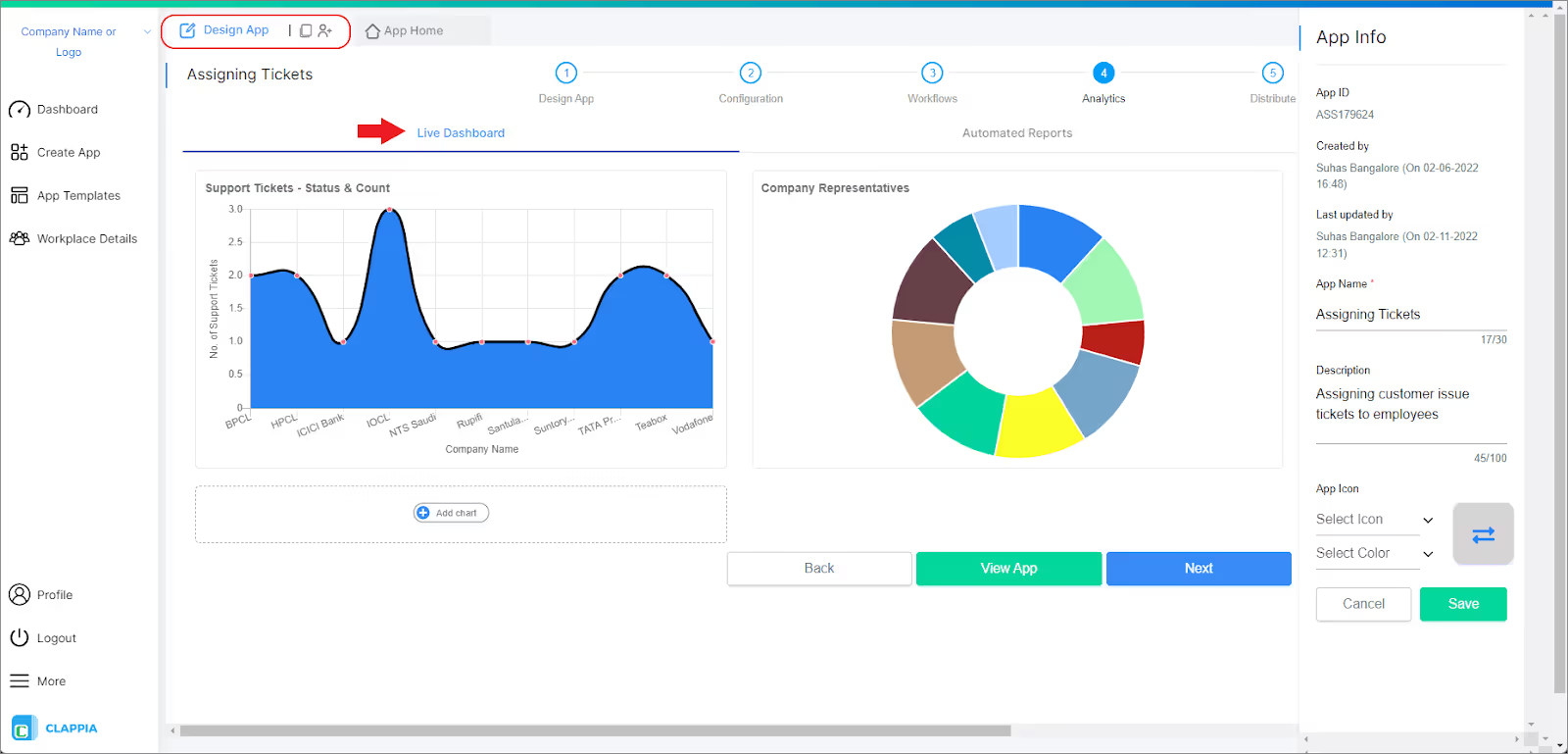
Build comprehensive route analytics using Clappia's analytics features showing total routes completed daily, weekly, and monthly, average distance per route, fuel consumption and costs, on-time performance percentages, driver productivity metrics, and stop completion times.
Bar graphs visualize route efficiency trends over time. Data tables provide detailed route lists with filtering by driver, vehicle, date, or territory. Map visualizations display all active routes and driver locations simultaneously.
Automated reports can be scheduled to run daily, weekly, or monthly and delivered automatically to operations managers, dispatch teams, or executives via email. Reports include mileage summaries, delivery success rates, exception reports for issues, and cost analyses.
Real-time dashboards give instant visibility into current field operations, showing how many routes are in progress, which drivers are running behind schedule, upcoming deliveries, and overall fleet status.
Connect your custom route planning app to other business systems using Clappia's REST API integration. Send route data to accounting software for driver payments and vehicle expenses, sync with order management systems to automatically create stops, integrate with fuel card systems to track costs, and connect with fleet management platforms for vehicle maintenance scheduling.
Database integration with MySQL, PostgreSQL, or SQL Server enables direct connections to ERP systems, customer databases, and inventory management platforms. Google Sheets integration syncs route data for financial analysis and reporting.
Zapier integration connects your route planning app to 1000+ applications without coding, enabling automated workflows between routing and CRM, accounting, communication, and productivity tools.
Enhance your route planning and tracking system with powerful capabilities: Dynamic printing for generating route sheets and delivery manifests as PDFs, unique route numbering with auto-increment and custom prefixes, multi-level approval workflows for route changes or exceptions, validation rules to prevent scheduling conflicts or capacity overruns, and AI-powered optimization for intelligent route suggestions.
The Code Block enables advanced custom logic using JavaScript for complex routing algorithms, integration with specialized mapping APIs, sophisticated capacity calculations, or unique business rules beyond standard formulas.
Your custom route planning app can include a variety of crucial components that Clappia offers:
Geolocation and GPS Integration: Use Clappia's GPS location and geofencing features to accurately track the real-time location of your fleet.
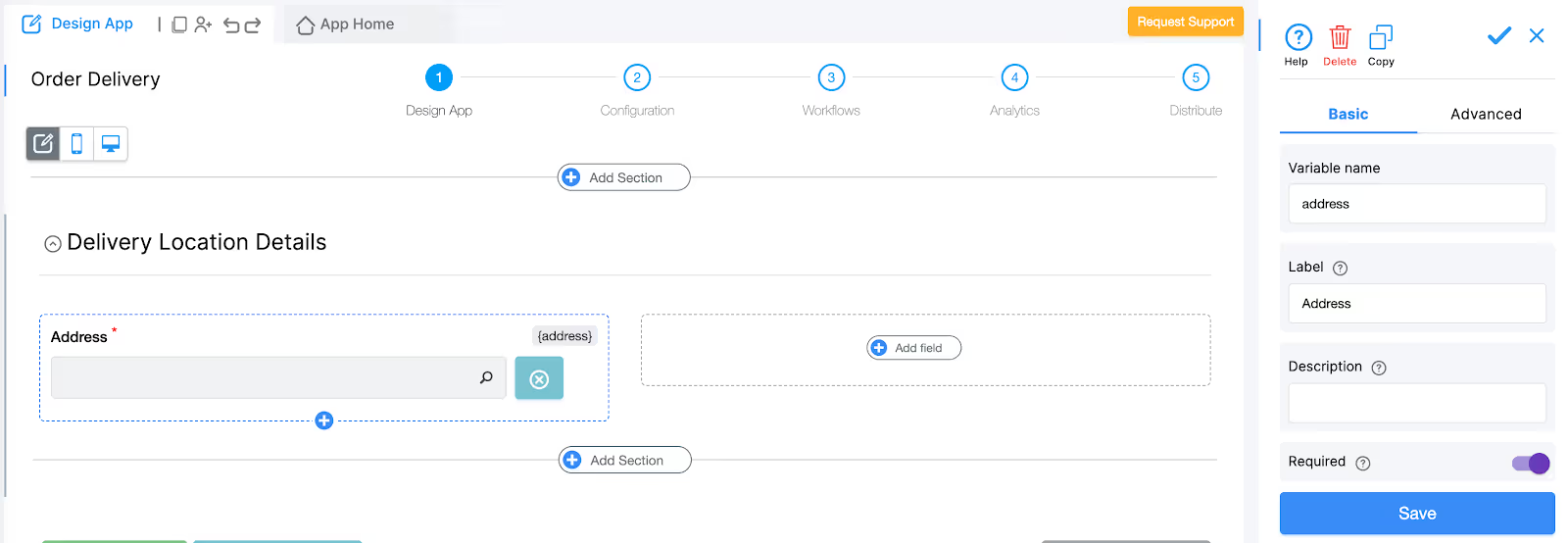
Address and Mapping: Capture accurate locations using the address block, ensuring that your route planning is based on precise geographical data.
Route Optimization: Implement logic to find the most efficient routes using logic execution features, reducing fuel costs and delivery times.
Live Tracking: Keep an eye on your fleet's movement with live tracking capabilities, providing real-time updates to improve customer satisfaction.
Automated Reports and Analytics: Leverage automated reports and bar graphs for data-driven decisions, making it easy to analyze performance and areas for improvement.
Creating your route planning and tracking system with Clappia provides significant advantages over off-the-shelf software. You get exactly the fields, tracking features, and workflows your operations need without paying for unused functionality or rigid structures that don't match your processes.
Changes and updates happen immediately through Clappia's visual designer without waiting for vendor development cycles or paying for customization. Your custom system scales from basic route planning to comprehensive fleet management as your needs grow.
Complete control over data means your sensitive operational information stays within your infrastructure. Role-based access controls ensure appropriate security for different user types.
Getting started is free with unlimited apps. Build and test your route planning system without any upfront investment. Professional plans starting at $5 per user per month include advanced features like white-labeled apps, workflow automation, live tracking capabilities, and priority support.
Understanding typical routing problems helps businesses implement effective solutions.
Planning routes manually in spreadsheets or on paper maps consumes 2-4 hours daily for dispatchers. Route planning software automates optimization in seconds, freeing dispatchers to handle customer service, monitor field operations, and respond to exceptions. Automated planning also produces better routes than manual methods.
Even with planned routes, drivers often take inefficient paths based on habit or preference. GPS tracking software shows exactly which routes drivers follow, identifies deviations, provides evidence for coaching, and enables comparison of planned versus actual routes. Driver-friendly mobile apps with turn-by-turn navigation increase route compliance.
Without tracking software, dispatchers don't know where drivers are, whether deliveries are on schedule, why certain stops take longer than expected, or when problems arise. Real-time tracking eliminates blind spots through live location visibility, automatic status updates, exception alerts, and comprehensive activity logs.
Rush orders, customer cancellations, vehicle breakdowns, and traffic delays require route adjustments. Dynamic route planning software handles changes gracefully by recalculating optimal routes instantly, reassigning stops to other drivers automatically, updating all drivers simultaneously, and maintaining efficiency despite disruptions.
"I never received it" claims cost businesses money and damage relationships. Electronic proof of delivery with photos, signatures, GPS coordinates, and timestamps provides irrefutable documentation. Digital records are easier to access and share than paper forms.
Customers miss deliveries when they don't know when to expect arrival. Automated customer notifications with delivery windows, live tracking links, and arrival alerts dramatically reduce missed deliveries. Proactive communication improves customer satisfaction and first-attempt success rates.
Without analytics, businesses can't determine if routes are efficient, which drivers perform best, whether fuel costs are reasonable, or how to improve operations. Route analytics dashboards transform data into insights enabling continuous improvement, performance benchmarking, cost reduction identification, and operational optimization.
Manual routing processes don't scale as stop counts and fleet size increase. Route planning software handles unlimited growth in stops, drivers, and vehicles without requiring additional planning staff or time.
Technology continues transforming route optimization and fleet management.
Artificial intelligence enhances route planning software with machine learning that continuously improves optimization based on historical performance, predictive analytics forecasting traffic and delivery times, automatic identification of route efficiency opportunities, dynamic route adjustment suggestions during execution, and intelligent driver-route matching based on performance patterns.
AI enables conversational route planning where dispatchers describe requirements and the system generates optimal routes automatically.
As autonomous delivery vehicles become viable, route planning software will integrate with self-driving systems for automatic route execution, coordination of mixed human-autonomous fleets, charging or refueling schedule optimization, and compliance with autonomous vehicle regulations.
Route planning software will expand beyond ground vehicles to include drone delivery route optimization, 3D route planning considering altitude, coordination with air traffic control systems, and weather-aware flight planning for safe operations.
Environmental concerns drive demand for route planning software that minimizes carbon emissions through electric vehicle range optimization, preferred low-emission route selection, carbon footprint calculation and reporting, and offset program integration for carbon-neutral delivery services.
AR technology will enhance driver navigation with visual overlays showing stop locations, turn-by-turn AR directions floating in real-world views, package identification through AR scanning, and building navigation for complex multi-unit properties.
Route planning software and tracking software have evolved from basic mapping tools to comprehensive fleet management platforms that drive operational efficiency, reduce costs, and improve customer satisfaction. The right routing and tracking solution eliminates wasted planning time, optimizes field operations, prevents fuel waste, and provides complete visibility into fleet activities.
When selecting route planning and tracking software, prioritize your specific operational requirements over feature lists. Delivery companies need high-density multi-stop optimization and proof of delivery. Field service businesses require appointment scheduling and technician skill matching. Sales teams need territory management and CRM integration. Custom industries benefit from tailored solutions.
For organizations wanting complete control, flexibility, and customization, building a custom route planning and tracking system with Clappia provides unmatched ability to design solutions that perfectly match your operational processes, unique requirements, and specific workflows—all without writing code or paying for features you'll never use.
The transition from manual routing to automated, intelligent route planning delivers immediate benefits in efficiency, cost reduction, visibility, and customer satisfaction. Operations teams spend less time planning and more time executing. Business owners gain real-time insight into field performance. Customers experience reliable, transparent service that builds trust and loyalty.
Whether you choose commercial route planning software or build a custom solution, implementing proper routing and tracking systems is essential for modern logistics, delivery, and field service success. Start improving your route planning and fleet tracking today to strengthen operational efficiency, reduce costs, and grow your business more profitably.
Ready to build your custom route planning and tracking software? Sign up for free and create unlimited route management applications with Clappia's powerful no-code platform. Professional plans starting at $5 per user per month provide advanced features including live GPS tracking, workflow automation, mobile apps, and comprehensive analytics. Explore Clappia's features and pricing options to discover how custom routing solutions can transform your field operations.
L374, 1st Floor, 5th Main Rd, Sector 6, HSR Layout, Bengaluru, Karnataka 560102, India
3500 S DuPont Hwy, Dover,
Kent 19901, Delaware, USA


.svg)




3500 S DuPont Hwy, Dover,
Kent 19901, Delaware, USA
L374, 1st Floor, 5th Main Rd, Sector 6, HSR Layout, Bengaluru, Karnataka 560102, India

.avif)
%20(1).png)

.jpg)