

Managing employee work hours and processing accurate payroll represents one of the most critical yet time-consuming responsibilities for businesses of any size. Payroll tracking software combined with comprehensive work hours tracking eliminates manual errors, ensures labor law compliance, prevents time theft, reduces administrative overhead, and guarantees employees receive accurate, timely compensation for every hour worked.
Traditional time tracking methods using paper timesheets, punch cards, or basic spreadsheets create countless opportunities for errors, buddy punching fraud, payroll disputes, compliance violations, and wasted administrative hours. Modern payroll and work hours tracking software built on AI-powered no-code platforms like Clappia transforms these challenges into streamlined, automated workflows that save time, reduce costs, improve accuracy, and provide real-time visibility into labor expenses and employee attendance patterns. Start building your payroll tracking system without writing a single line of code.
Payroll tracking software automates the complete process of recording employee work hours, calculating gross wages based on hourly rates or salaries, computing overtime pay according to labor laws, applying deductions for taxes and benefits, generating pay stubs and payroll reports, processing direct deposits or checks, and maintaining comprehensive payroll records for compliance audits.
Effective payroll systems integrate with time tracking to ensure every working minute translates into accurate compensation. This integration eliminates double data entry, reduces payroll processing time from hours to minutes, provides audit trails for compliance, and enables real-time visibility into labor costs against budgets.
Work hours tracking (also called time tracking or timesheet management) captures when employees start work (clock in), take breaks and lunches, return from breaks, and end their workday (clock out). Advanced systems track actual hours versus scheduled hours, calculate overtime automatically, monitor attendance patterns and absenteeism, verify employee locations through GPS, prevent buddy punching with biometric verification, and generate timesheet reports for payroll processing.
Modern time tracking extends beyond simple punch clocks to include mobile time tracking apps for remote and field employees, GPS location verification to confirm work site presence, offline time tracking that syncs when connectivity returns, project-based time tracking for client billing, and integration with scheduling systems for complete workforce management.
Separating payroll and time tracking creates disconnected systems requiring manual data transfer, duplicate data entry prone to errors, delayed payroll processing, incomplete audit trails, difficulty identifying labor cost overruns, and frustration for both HR teams and employees. Integrated systems provide single-source data accuracy, automated payroll calculations from tracked hours, real-time labor cost visibility, streamlined compliance reporting, and improved employee satisfaction through transparent, accurate pay.
Buddy punching—when one employee clocks in or out for another—costs US businesses $373 million annually according to industry research. Paper timesheets allow employees to round hours in their favor, arrive late without accountability, or claim hours not actually worked. GPS location tracking, biometric verification, photo-verified clock-ins, and geofencing eliminate these issues by confirming employee identity and location at every clock-in event.
Manual payroll calculations introduce numerous error opportunities including incorrect overtime calculations that violate labor laws, missed deductions creating tax problems, wrong hourly rates applied to employees, calculation mistakes in gross and net pay, and incorrect application of shift differentials or bonuses. These errors cost businesses money, damage employee trust, create legal exposure, and consume administrative time resolving disputes and corrections.
Labor laws require businesses to maintain accurate records of all hours worked, overtime calculations, pay rates and changes, deductions and withholdings, and paid time off accruals. Manual systems lack automated audit trails, make record retrieval time-consuming during audits, create compliance gaps exposing businesses to penalties, and provide no verification of data accuracy or completeness.
HR teams processing payroll manually spend countless hours collecting timesheets from all employees, verifying hours and resolving discrepancies, manually entering data into payroll systems, calculating overtime and deductions, generating pay stubs and reports, and distributing payments. This administrative burden prevents HR teams from focusing on strategic initiatives, increases payroll processing costs, creates delays in payment processing, and frustrates employees waiting for accurate paychecks.
Clappia's AI-powered no-code platform provides comprehensive capabilities specifically designed for payroll and work hours tracking, enabling businesses to build custom solutions that address every aspect of workforce management and payroll processing.
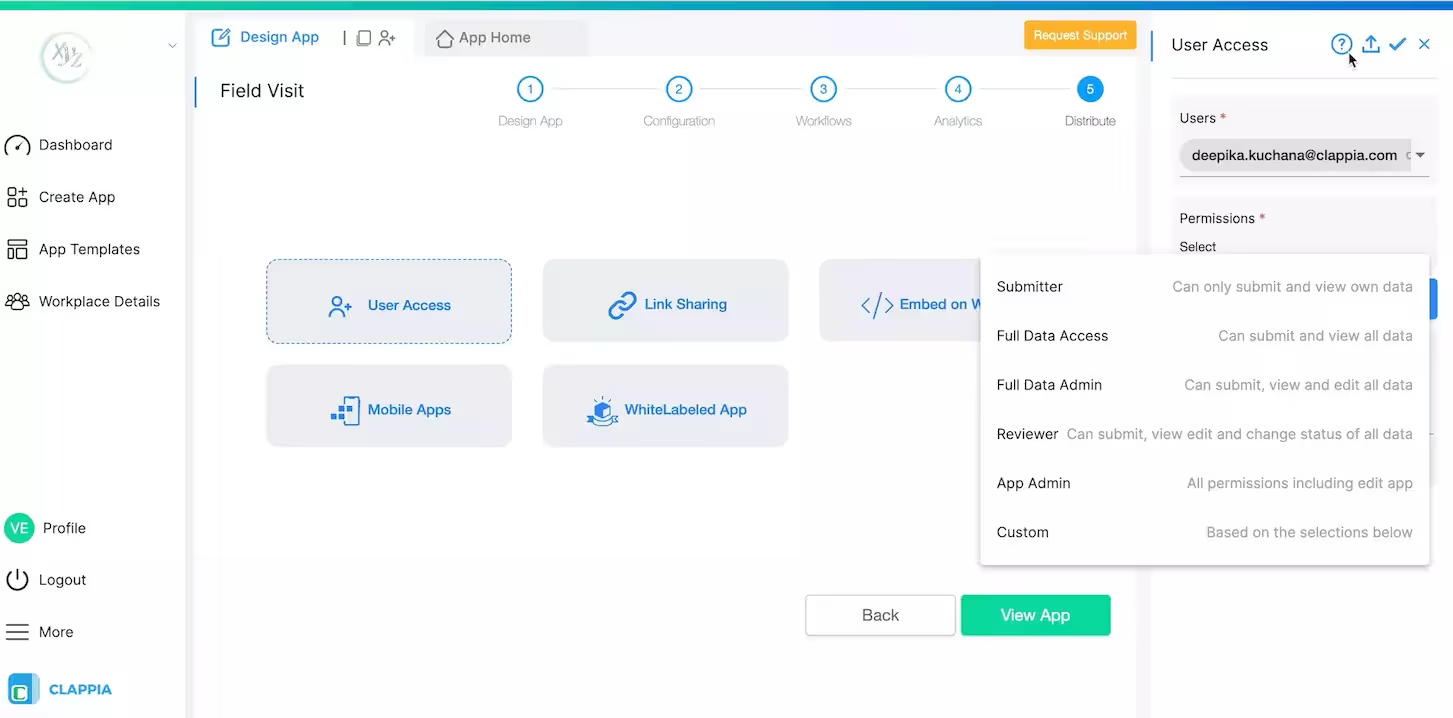
Managing who can view and edit data is crucial in payroll management. Clappia provides extensive access control and app permissions functionalities to ensure sensitive data is accessible only to authorized personnel. Role-based access ensures employees view only their own timesheets and pay information, managers access their team's attendance and payroll data, HR administrators manage company-wide payroll processing, and payroll processors access necessary wage calculation data. This granular security prevents unauthorized access to confidential compensation information, maintains employee privacy, ensures compliance with data protection regulations, and creates clear accountability for payroll data access and modifications.
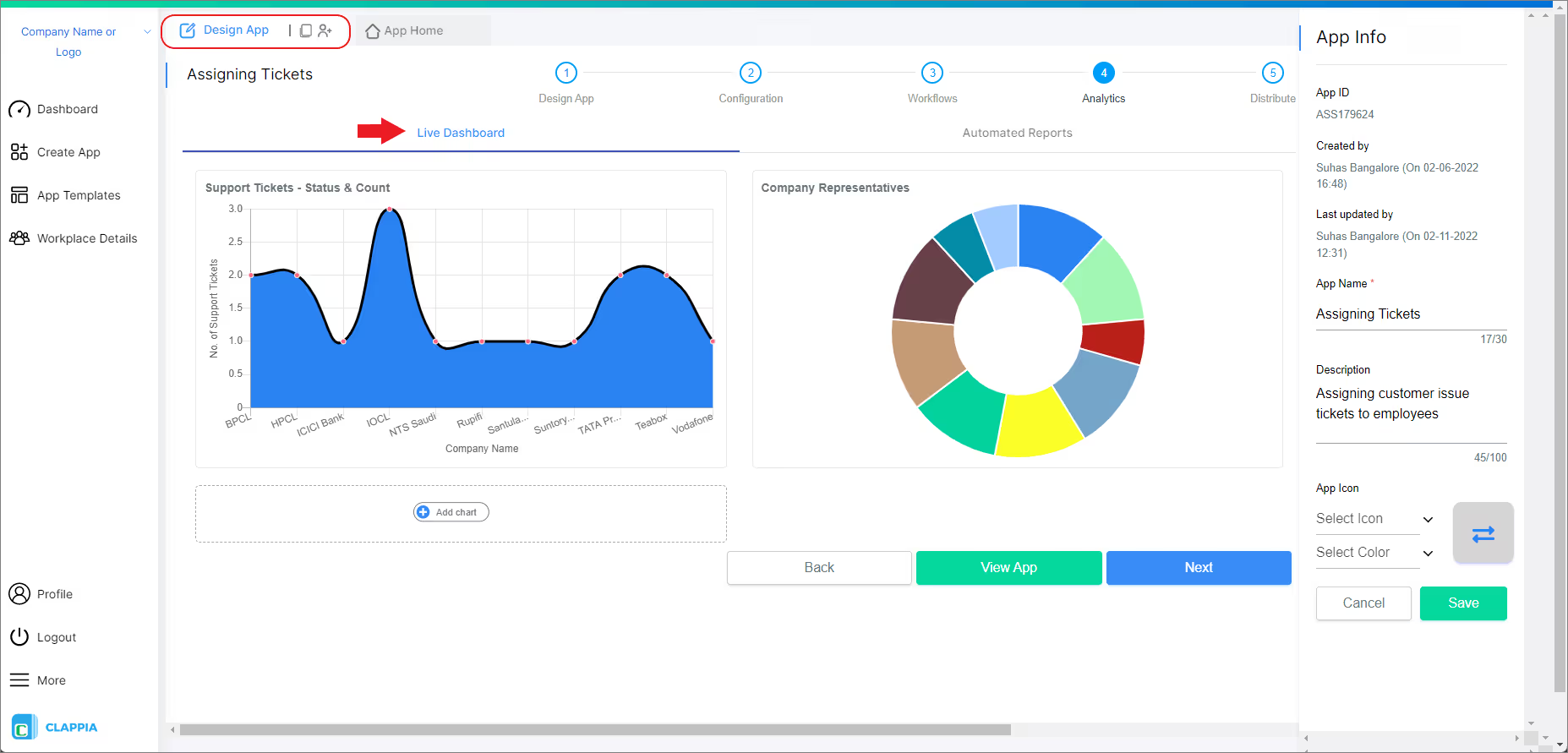
Efficiency is further enhanced with automated reports that help in generating payroll summaries, attendance reports, and other critical data points without manual intervention. Automated reporting eliminates hours spent manually compiling payroll data, ensures consistent report formats across pay periods, delivers reports via email on customizable schedules, and maintains historical archives for audits and compliance. Organizations configure reports once and receive them automatically—daily attendance summaries, weekly overtime reports, monthly payroll summaries, quarterly tax reports, and annual compensation statements—all generated without ongoing administrative effort.
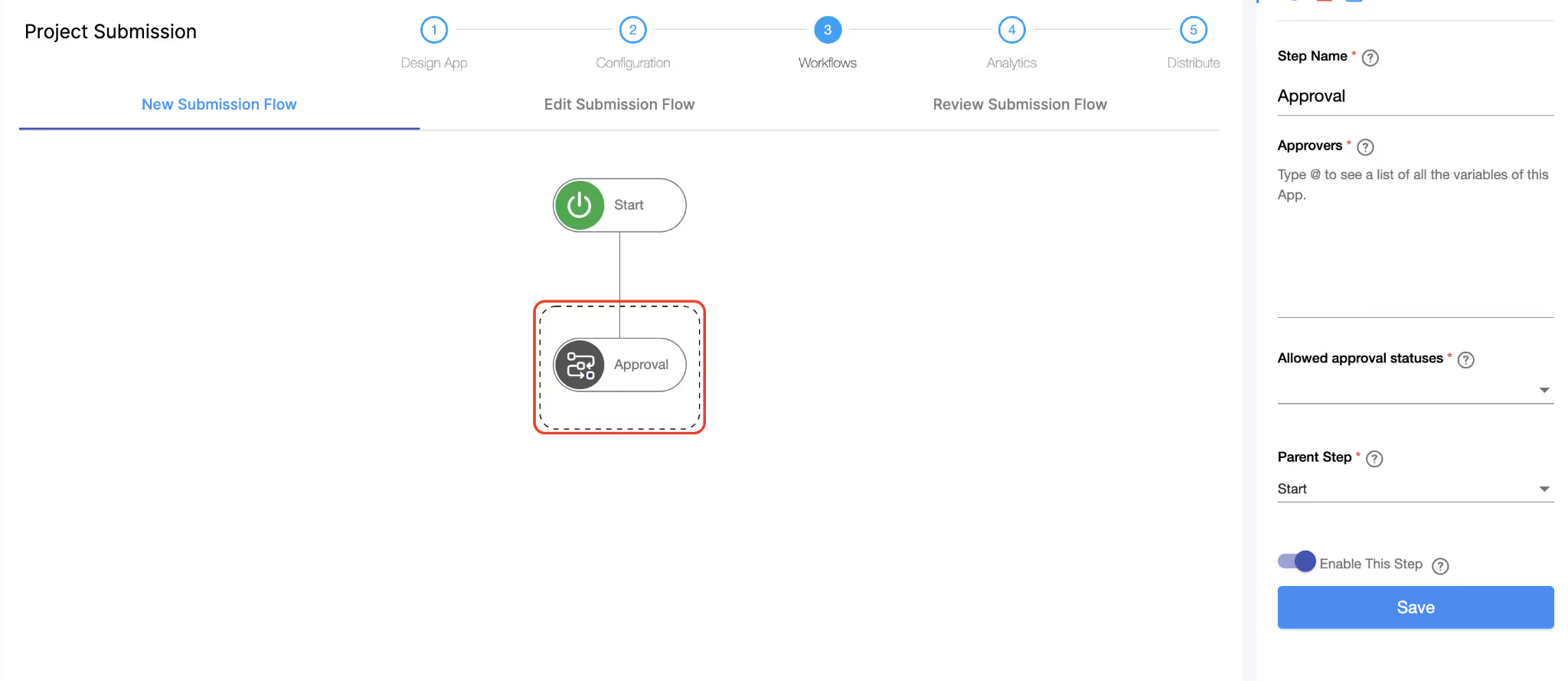
Approval workflows are essential in multi-layered organizational structures to ensure data is reviewed and validated at multiple levels before payroll release. Clappia's dynamic approval systems simplify this process by automatically routing timesheets through approval chains, sending notifications to approvers at each stage, tracking approval status in real-time, enabling mobile approval from any device, and maintaining complete audit trails. Multi-level approvals ensure timesheet accuracy through manager review, require department head approval for overtime, mandate HR verification for policy compliance, and provide payroll administrator final sign-off before processing. This systematic review process catches errors before payroll runs, creates accountability, and ensures accurate employee compensation.
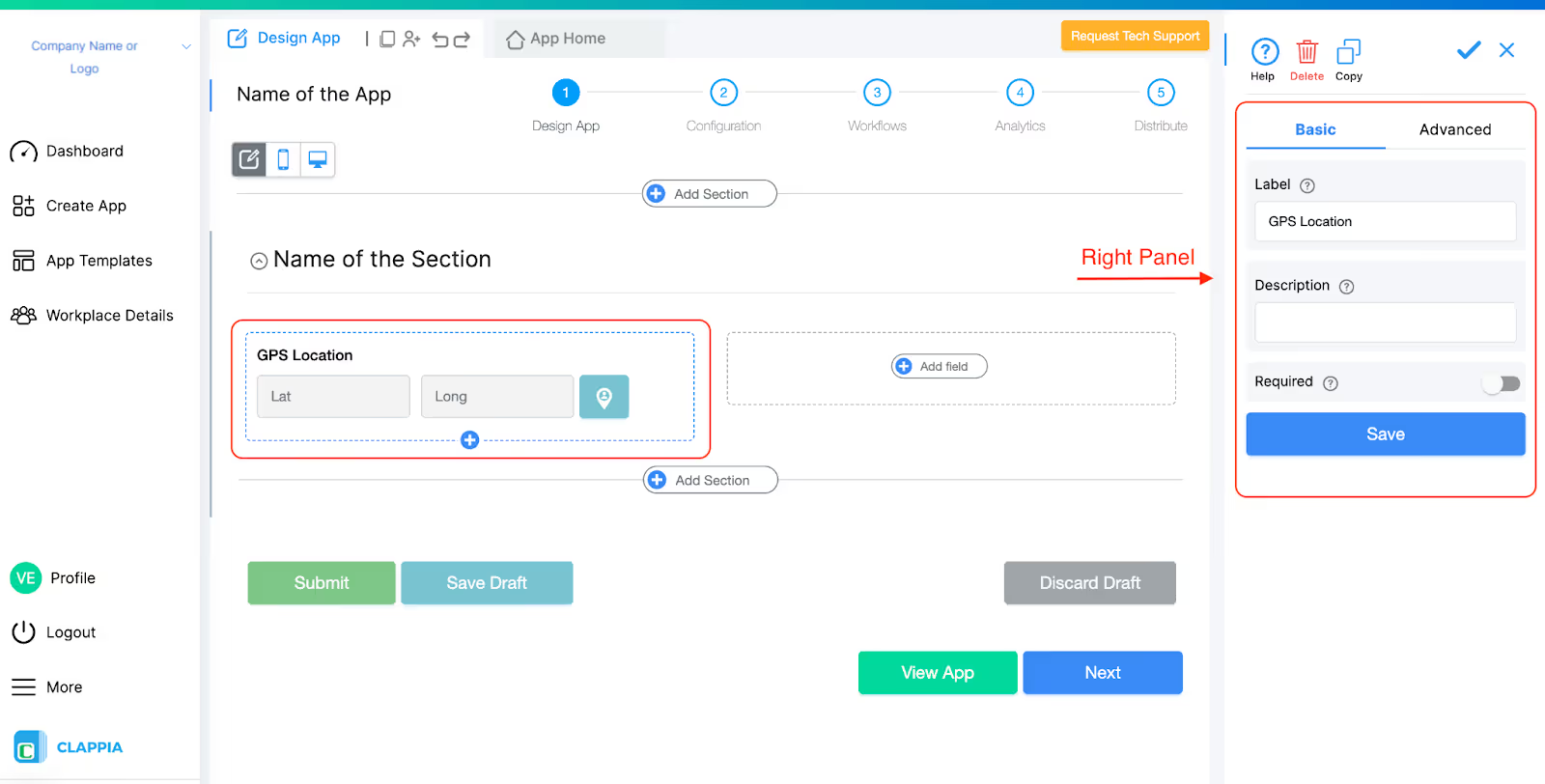
For businesses relying on field workers, GPS location and geofencing ensure accurate recording of employee work hours by tracking their check-ins and check-outs. GPS capabilities capture exact coordinates at every clock-in event, verify employees are physically present at designated work sites, prevent time theft from remote locations, and create location records for client billing verification. Geofencing establishes virtual boundaries around work locations, restricts clock-ins to employees within approved geographic areas, sends alerts for clock-ins outside permitted zones, and automatically logs location data without requiring employee action. These location verification technologies eliminate buddy punching, confirm field service completion, validate mileage and travel claims, and provide accountability for remote workforce management.
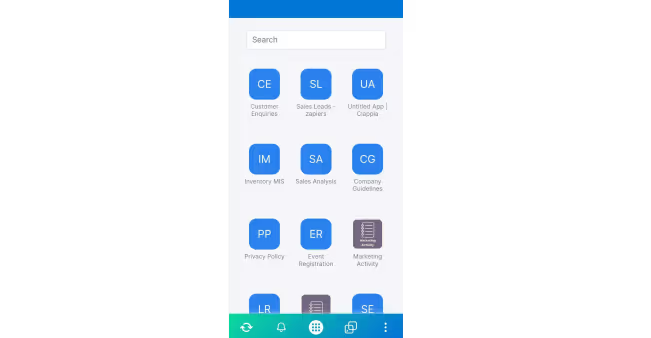
Clappia's mobile responsiveness allows employees to log hours and access payroll data from any device, anywhere, providing the flexibility essential in modern work environments. The mobile-first design ensures intuitive interfaces optimized for smartphones and tablets, fast performance even on cellular connections, seamless experience across iOS and Android devices, and consistent functionality whether accessing from mobile or desktop. Employees clock in and out from job sites using mobile devices, review timesheets and pay information from anywhere, submit PTO requests on the go, and receive real-time notifications about payroll status. This mobility supports today's distributed workforce—field service teams, remote employees, traveling sales representatives, and flexible work arrangements—without sacrificing time tracking accuracy or payroll data security.
Clappia's AI-powered no-code platform enables businesses to build custom payroll and time tracking applications without programming knowledge, IT resources, or expensive consultants. The visual application builder uses drag-and-drop blocks representing common payroll and time tracking functions. Organizations deploy complete systems in days instead of months, customize workflows to match exact business processes, modify applications as requirements evolve, and scale solutions as businesses grow—all without writing code.
Clappia provides pre-built blocks specifically designed for workforce management. Date Selector blocks capture work dates and payroll periods with calendar interfaces. Time Selector blocks record precise clock-in and clock-out times with automatic timestamps. Number Input blocks collect hourly rates, hours worked, and overtime calculations. Single-Line Text and Multi-Line Text capture employee names, job titles, notes, and explanations.
Dropdown selectors standardize employee departments, pay types (hourly, salary, contractor), work locations, and shift assignments. Single Selector blocks enable employees to choose between regular hours, overtime, double-time, sick leave, or vacation time when logging hours.
Payroll processing involves several steps from calculating hourly wages to distributing salaries. Clappia simplifies this with features like:
Utilizing time selectors for accurate work hour logging. Time blocks capture exact clock-in and clock-out times with automatic timestamps eliminating manual time entry errors. Employees select times from intuitive clock interfaces or the system automatically records current time for instant clock-ins. The precision ensures accurate hour calculations for payroll, creates verifiable time records for compliance, supports multiple time zones for distributed teams, and integrates seamlessly with payroll calculations. Combined with date selectors, the system maintains complete temporal records of all work hours across any date range.
Push data with REST APIs to connect Clappia seamlessly with HR and accounting applications for smooth payroll management. REST API integration enables bidirectional data flow between Clappia time tracking and payroll providers including QuickBooks, ADP, Paychex, Gusto, and custom financial systems. Approved timesheet data automatically transfers to payroll systems eliminating manual data entry. Employee information synchronizes ensuring consistency across platforms. Hours worked, overtime, and deductions flow directly into wage calculations. This integration creates single-source time data accuracy, reduces payroll processing time by 80%, eliminates transcription errors, and maintains data consistency across enterprise systems. Database integration provides direct connectivity to MySQL, PostgreSQL, SQL Server, and other databases for complex enterprise requirements.
Employing encryption to protect sensitive payroll information. Security measures include encrypted data transmission protecting information in transit, secure cloud storage with redundancy preventing data loss, role-based access controls restricting data visibility, audit logging tracking all data access and modifications, and regular automated backups enabling disaster recovery. These comprehensive security protections ensure payroll data confidentiality, maintain employee privacy, comply with data protection regulations including GDPR and CCPA, and build employee trust in digital payroll systems.
Easy bulk data downloads for payroll archives and employee records management. Bulk operations enable downloading complete payroll datasets for offline analysis, exporting timesheet data to spreadsheets for custom reporting, archiving historical payroll records for long-term storage, and transferring employee data between systems during migrations. This flexibility supports diverse reporting needs, enables integration with legacy systems, provides data portability, and ensures organizations maintain control over their payroll information.
Tracking work hours accurately is paramount for operational efficiency. Clappia addresses this need through:
Visualize work hours in bar graphs and other graphical formats. Visual analytics transform raw time tracking data into intuitive charts and graphs revealing patterns, trends, and insights. Bar graphs compare hours worked across employees, departments, projects, or time periods. Pie charts show time distribution across projects or activities. Line charts track attendance trends over weeks and months. These visualizations enable managers to identify overtime patterns requiring attention, spot attendance issues early, compare actual versus scheduled hours, analyze labor distribution across projects, and make data-driven staffing decisions. Real-time visual dashboards provide instant visibility into current workforce status.
Create data tables and live dashboards for real-time work hour tracking. Live dashboards display current workforce status—who's clocked in now, which shifts are understaffed, which employees are approaching overtime thresholds, and how actual hours compare to scheduled coverage. Data tables provide sortable, filterable views of timesheet data enabling detailed analysis. Managers drill down into specific departments, date ranges, or employees to investigate attendance patterns, identify productivity trends, and verify timesheet accuracy. Real-time updates ensure dashboards reflect the latest clock-ins and clock-outs providing up-to-the-minute workforce visibility supporting proactive management decisions.
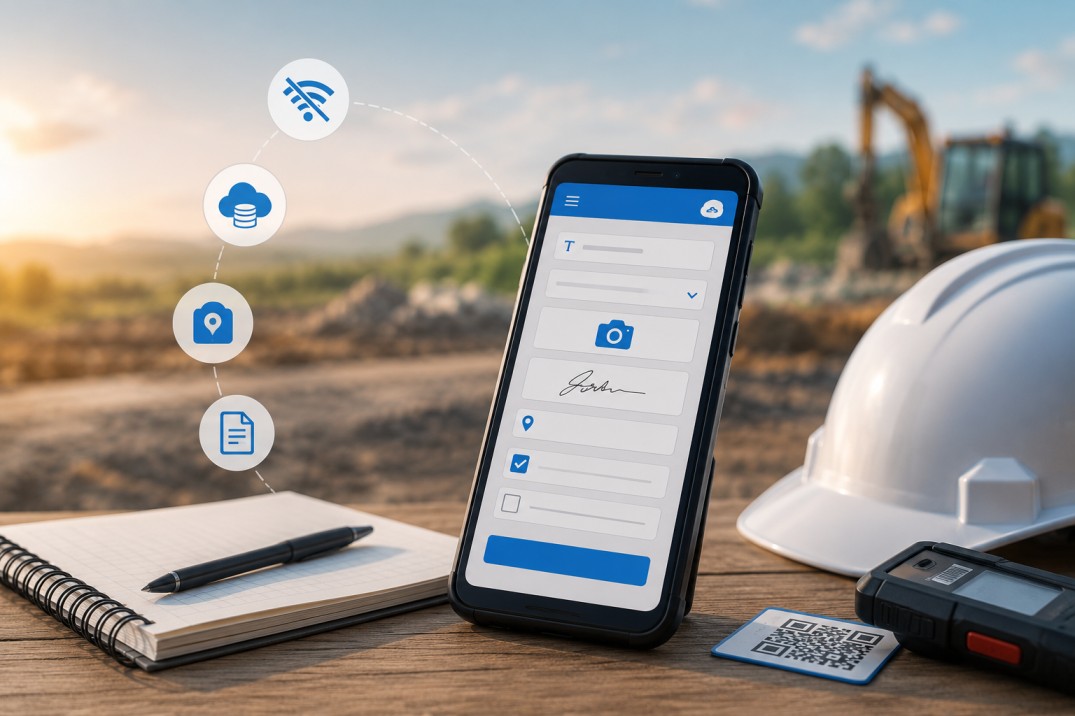
Operate Clappia in offline mode allowing remote areas access for field workers. Offline functionality ensures time tracking continues reliably even when internet connectivity becomes unavailable—critical for construction sites, rural field service, underground facilities, remote delivery routes, and mobile employees transitioning between coverage areas. Employees clock in and out normally using mobile apps. The application stores time entries locally on devices, maintains full time tracking functionality without connectivity, and automatically synchronizes all pending entries once internet connection resumes. This reliability guarantees no lost time data, enables field workforce time tracking anywhere, eliminates connectivity as a time tracking barrier, and provides the same accuracy and features regardless of location.
Mobile-responsive applications enable employees to clock in and out from smartphones, tablets, or any web browser regardless of location. Field service technicians, delivery drivers, construction workers, sales representatives, remote workers, and distributed teams gain the same easy time tracking as office-based employees. The mobile-first design ensures intuitive interfaces optimized for touchscreens, fast loading even on cellular connections, minimal data usage, and support for both iOS and Android devices.
GPS location tracking automatically captures exact coordinates at every clock-in and clock-out event, creating verifiable proof of employee presence at designated work sites, job sites, customer locations, or approved remote work addresses. This location data prevents employees from clocking in before arriving at work sites, confirms field employees visit required locations, validates mileage and travel time claims, and provides records for client billing verification.
Geofencing capabilities establish virtual boundaries around work locations. The system restricts clock-ins to employees physically present within defined geographic areas, sends alerts when employees clock in outside permitted zones, prevents time theft from home or unauthorized locations, and automatically captures location data without requiring employee action beyond normal clock-in procedures.
Offline mode functionality ensures time tracking continues even when internet connectivity becomes unavailable—critical for remote work sites, rural areas, construction locations, underground facilities, or mobile employees transitioning between coverage areas. Employees clock in and out normally using the mobile app. The application stores time entries locally on the device, maintains full functionality without connectivity, and automatically synchronizes all pending time entries once internet connection resumes. This reliability guarantees no lost time data and complete time tracking records regardless of location or network availability.
Formula blocks bring Excel-like calculation power directly into payroll applications. These dynamic calculation engines automatically compute gross pay from hours worked and hourly rates, calculate overtime pay at time-and-a-half or double-time, apply shift differentials for night or weekend work, compute deductions for taxes, benefits, and garnishments, calculate net pay after all deductions, and generate year-to-date totals for tax reporting.
Formula blocks support comprehensive mathematical operations including addition, subtraction, multiplication, and division for basic calculations, percentage calculations for tax withholding and commission, conditional logic for overtime thresholds and bonus calculations, date arithmetic for calculating days between dates, and text manipulation for formatting employee IDs and report data. Complex payroll scenarios requiring multi-step calculations are handled through nested formulas referencing multiple input fields.
Accurate overtime calculation prevents costly labor law violations. Formula blocks automatically identify hours exceeding 40 per week or 8 per day (depending on jurisdiction), calculate overtime at 1.5x regular hourly rate, apply double-time rates for hours exceeding maximum thresholds, handle multiple overtime thresholds for complex jurisdictions, and generate detailed overtime reports for payroll review and labor cost analysis.
Holiday pay, premium pay, and shift differentials calculate automatically based on configurable rules. The system applies holiday pay rates to designated holidays, adds shift premiums for overnight or weekend shifts, calculates on-call pay and callback pay, processes commission calculations alongside base pay, and computes bonuses, incentives, and allowances according to compensation structures.
Direct integration between time tracking and payroll calculations eliminates manual data transfer. Approved timesheets automatically flow into payroll calculations, hours worked populate directly into wage calculations, overtime hours trigger automatic premium pay, paid time off deducts from accrual balances, and complete payroll data generates with a single button click. This automation reduces payroll processing time by up to 80%, eliminates transcription errors, ensures calculation consistency, provides instant payroll previews, and enables same-day payroll processing when needed.
Approval workflows ensure timesheet accuracy before payroll processing. Employees submit completed timesheets at the end of each week or pay period. The system automatically routes timesheets to direct managers for initial review and approval, escalates to department heads for secondary approval if required, sends to HR teams for compliance verification, and notifies payroll administrators when all approvals complete. This structured approval process catches errors before payroll runs, creates accountability at each level, maintains audit trails for compliance, and provides transparency for employees regarding timesheet status.
When managers identify timesheet issues—missing clock-outs, excessive overtime requiring explanation, location discrepancies needing clarification, or hour discrepancies versus scheduled shifts—approval workflows enable rejecting timesheets back to employees with specific comments explaining required corrections. Employees receive automatic notifications of rejections, view manager comments explaining issues, edit and resubmit corrected timesheets, and track resubmission status through the approval chain. This correction process prevents payroll errors, creates communication records for disputes, ensures accurate time records, and maintains compliance documentation.
Workflow automation enforces timesheet submission and approval deadlines. The system sends automatic reminders to employees as timesheet deadlines approach, escalates overdue timesheets to managers, notifies supervisors of pending approvals requiring attention, and provides dashboard visibility of approval bottlenecks. Automated deadline management ensures payroll processing stays on schedule, prevents last-minute timesheet crises, reduces administrative follow-up burden, and improves payroll processing predictability.
Organizations with shared workspace environments or employees without company-issued devices benefit from mobile kiosk applications. Tablets or smartphones in central locations serve as time clocks where employees clock in and out using employee IDs, PIN codes, or photo verification, select their names from employee lists, confirm clock-in with digital signatures, and view their current shift status. Kiosk mode provides the simplicity of traditional time clocks with the power of modern time tracking, eliminates the cost of dedicated time clock hardware, enables easy relocation of time tracking stations, and supports employee photo capture for verification.
Employees access their own time tracking data anytime through mobile apps or web browsers. They view current pay period hours and overtime, review past timesheet submissions and approvals, check paid time off balances and accruals, verify clock-in and clock-out times, and identify missing punches or errors requiring correction. This transparency reduces payroll inquiries to HR, enables employees to catch errors early, builds trust through visibility, and reduces payroll disputes.
Integrated paid time off management within time tracking applications streamlines leave management. Employees submit PTO requests specifying dates, request types (vacation, sick, personal), and explanations. Approval workflows automatically route requests to managers considering team coverage and existing time off. Approved time off automatically reduces accrual balances, populates into timesheets on scheduled dates, and integrates with payroll calculations. This integration eliminates separate PTO tracking systems, provides accurate accrual accounting, ensures payroll reflects approved time off, and creates audit trails for compliance.
Analytics dashboards provide instant visibility into payroll expenses and labor utilization. Bar graphs compare labor costs across departments, locations, and projects. Pie charts visualize labor cost distribution by employee type, job role, or cost center. Line charts track labor cost trends over time identifying seasonal variations and spending patterns. Real-time dashboards enable proactive labor cost management, identify departments exceeding budgets, reveal overtime trends requiring attention, and support data-driven staffing decisions.
Detailed overtime reporting identifies excessive overtime indicating potential staffing gaps or workflow inefficiencies, employees consistently working overtime who may risk burnout, departments with unplanned overtime exceeding budgets, and opportunities to convert overtime costs into additional staff. Overtime analytics prevent budget overruns, support workforce planning decisions, identify training needs causing inefficiency, and demonstrate cost-saving opportunities.
Time tracking data reveals valuable workforce patterns including absenteeism trends by department or season, chronic tardiness requiring performance management, employees frequently working unapproved overtime, location-specific attendance issues, and productivity variations across shifts or days. These insights enable proactive workforce management, identify training or morale issues, support fair performance evaluations, and optimize scheduling for maximum productivity.
Automated reporting generates comprehensive payroll summaries on customizable schedules. Daily reports show hours worked by all employees, overtime accumulation, and pending timesheet approvals. Weekly reports aggregate total labor costs, department-level spending, and overtime by employee. Monthly reports provide payroll summaries for accounting, tax withholding totals for remittance, and year-to-date compensation by employee. Quarter-end reports support tax filing and compliance reporting. These automated reports eliminate manual report generation, ensure consistent report formats, deliver reports via email to stakeholders, and maintain historical reporting archives.
REST API capabilities enable seamless data exchange between Clappia time tracking applications and external payroll providers including ADP, Paychex, QuickBooks Payroll, Gusto, and other payroll processing services. Approved timesheet data automatically transfers to payroll systems eliminating manual data entry. Employee master data synchronizes bidirectionally ensuring consistent information. Hours worked, overtime, and PTO deductions flow directly into payroll calculations. The integration creates single-source time tracking data, reduces payroll processing time, eliminates transcription errors, and maintains data consistency across systems.
Organizations with enterprise resource planning (ERP) systems or custom HRIS platforms benefit from direct database connectivity. Clappia connects to MySQL, PostgreSQL, Microsoft SQL Server, and other relational databases. Time tracking data writes directly to enterprise databases for immediate availability to other business systems. Employee information pulls from authoritative HR databases ensuring accuracy. Payroll calculations integrate with general ledger for accounting workflows. This deep integration eliminates data silos, enables real-time data sharing, supports complex business intelligence, and maintains data consistency across enterprise applications.
Organizations preferring spreadsheet-based reporting leverage Google Sheets integration. Time tracking data automatically populates into designated Google Sheets providing familiar spreadsheet analysis tools, easy report distribution, and simple data visualization. Payroll administrators perform final calculations, adjustments, or custom reporting using Excel-like formulas. The integration provides the power of automated time tracking with the flexibility of spreadsheets for organizations not requiring complex payroll systems.
Payroll and time tracking applications automatically maintain complete historical records of every clock-in and clock-out event with timestamps, location data, and device information, timesheet submissions and edits with revision history, approval workflows showing all approvers and timestamps, formula calculations showing inputs and computed results, and payroll runs with detailed calculation breakdowns. These comprehensive records satisfy labor law record-keeping requirements, support unemployment and workers' compensation claims, enable accurate responses to wage and hour audits, and provide evidence for resolving employee disputes.
Time tracking systems enforce Fair Labor Standards Act (FLSA) compliance through automatic overtime calculation at required rates, meal break tracking and violation alerts, maximum hour enforcement preventing excessive overtime, minor employee work restriction enforcement, and accurate record maintenance meeting statutory requirements. Compliance automation reduces legal exposure, prevents costly penalties and back pay orders, demonstrates good-faith compliance efforts, and protects businesses from wage and hour lawsuits.
Employee time and payroll data requires robust security. User access controls restrict data visibility based on roles ensuring employees access only their own data, managers view only their team members, HR administrators access company-wide data, and payroll processors see only necessary payroll information. Encrypted data storage and transmission protect sensitive information. Audit logging tracks all data access and modifications. Regular automated backups prevent data loss. These security measures protect employee privacy, maintain confidential payroll information, comply with data protection regulations, and build employee trust.
Retail stores, restaurants, hospitality businesses, call centers, and other hourly workforce environments benefit dramatically from automated time tracking. Employees clock in and out from mobile devices or kiosk stations. The system tracks split shifts and breaks, calculates overtime automatically, integrates PTO into schedules, and generates accurate timesheets for payroll. Managers gain real-time visibility into who's currently working, schedule adherence, and labor cost versus sales. The automation reduces payroll processing time from hours to minutes, eliminates timesheet disputes, ensures wage and hour compliance, and provides data for optimizing staffing levels.
Field service technicians, sales representatives, delivery drivers, home healthcare workers, and other mobile employees require flexible time tracking from any location. GPS-enabled mobile applications capture clock-ins from customer sites and verify location at job sites. Offline functionality ensures continuous tracking in areas with poor connectivity. Location data supports mileage tracking for reimbursement and validates service call completion for billing. The system eliminates paper timesheets and mileage logs, provides accountability for field time, supports accurate client billing, and reduces administrative follow-up.
Consulting firms, law offices, accounting practices, engineering firms, and other professional service organizations require time tracking by project and client for accurate billing and cost accounting. Employee management applications enable tracking hours to specific projects, matters, or engagements. The system allocates time across multiple projects in single workdays, differentiates between billable and non-billable time, applies different billing rates by project or employee, and generates detailed time reports for client invoicing. Integration with billing systems ensures accurate invoicing, provides project profitability analysis, supports resource allocation decisions, and creates audit trails for billing disputes.
Manufacturing plants, distribution centers, healthcare facilities, and other 24/7 operations running multiple shifts benefit from shift-specific time tracking. The system captures clock-ins across day, evening, and night shifts with automatic shift differentials, tracks attendance across rotating shift schedules, calculates premium pay for less desirable shifts, monitors overtime across shift transitions, and generates shift-specific labor reports. Real-time visibility shows which positions are staffed on current shifts, overtime trending by shift and department, and attendance patterns affecting productivity. This data supports optimal shift scheduling, identifies training needs by shift, ensures adequate coverage, and controls premium pay costs.
Construction companies, general contractors, and subcontractors manage complex time tracking across multiple job sites, projects, and clients. Field data collection applications enable tracking hours to specific jobs and cost codes. GPS verification confirms employees are at correct job sites. Camera and file upload capabilities document site conditions and work progress. The system allocates labor costs to proper projects for accurate job costing, supports Davis-Bacon prevailing wage compliance, generates certified payroll reports, and provides documentation for client billings and change orders. Accurate job costing data supports better project bidding, identifies profitable versus money-losing projects, and enables proactive project management.
Creating custom payroll and work hours tracking software doesn't require IT projects lasting months or expensive consultants billing hundreds of thousands of dollars. Clappia's no-code platform enables HR teams and operations managers to build and deploy time tracking applications in days without technical skills. The visual application builder uses drag-and-drop blocks representing time tracking functions. Pre-built templates provide starting points for common scenarios including hourly employee time tracking, salaried employee attendance, field service time tracking, and project-based time allocation. Organizations customize templates to match exact workflows, policies, and reporting needs.
Free plans support building unlimited time tracking and payroll applications for initial deployment and testing. As organizations scale, professional plans add capabilities including white-labeled mobile applications with company branding for iOS and Android app stores, increased user limits supporting enterprise workforces, premium integration capabilities with payroll and HR systems, advanced analytics and custom reporting, and dedicated implementation support. The flexible pricing model ensures cost-effectiveness whether managing 10 employees or 10,000.
Video tutorials demonstrate building time tracking applications step-by-step from initial design through final deployment. Comprehensive help documentation covers every feature and common use cases with screenshots and examples. Active community forums connect organizations with other users sharing best practices, templates, and solutions. Scheduled demonstrations provide personalized guidance addressing specific payroll and time tracking requirements.
Successful time tracking implementations begin with pilot programs testing the system with a single department or location before company-wide rollout. Gathering employee feedback during pilots identifies usability issues and training needs. Gradual rollout by department or location manages change effectively and allows refinement based on lessons learned. Clear communication explaining benefits to employees—accurate pay, transparent time tracking, self-service visibility—builds buy-in. Training sessions covering clock-in procedures, timesheet submission, and PTO requests ensure smooth adoption. Post-launch support addressing questions and issues maintains momentum. This methodical approach maximizes adoption, minimizes resistance, and ensures successful implementation.
Accurate, efficient payroll processing and comprehensive work hours tracking represent fundamental requirements for every business with employees. Traditional manual methods—paper timesheets, punch cards, basic spreadsheets—create costly errors, consume excessive administrative time, expose businesses to compliance violations, enable time theft, frustrate employees with paycheck disputes, and prevent real-time visibility into labor costs.
Modern payroll and work hours tracking software built on AI-powered no-code platforms like Clappia eliminates these problems through automated time tracking with GPS verification and biometric authentication preventing fraud, formula-driven payroll calculations ensuring accuracy and compliance, integrated timesheet approval workflows maintaining accountability, mobile applications enabling field and remote employee time tracking, real-time analytics providing labor cost visibility, comprehensive audit trails supporting compliance, and seamless integration with accounting and HR systems eliminating data silos.
Organizations implementing automated payroll and time tracking software gain competitive advantages including 80% reduction in payroll processing time, elimination of calculation errors causing costly corrections, improved employee satisfaction through accurate timely pay, demonstrated wage and hour compliance reducing legal exposure, real-time labor cost visibility supporting proactive management, and data-driven workforce insights optimizing scheduling and staffing. The investment in payroll automation delivers returns through reduced administrative costs, eliminated payroll errors, decreased legal and compliance risks, improved employee retention, and enhanced operational efficiency.
Clappia empowers businesses to build custom payroll and time tracking solutions matching exact workflows, policies, and reporting needs without technical dependencies, expensive consultants, or lengthy IT projects. The no-code platform enables rapid deployment, continuous optimization, and unlimited customization as business needs evolve. Mobile-first design supports today's distributed workforce. Comprehensive integration connects with existing business systems. Robust security and compliance features protect sensitive employee data.
Discover Clappia's comprehensive capabilities and learn how payroll and work hours tracking software can transform your workforce management and payroll processes.
L374, 1st Floor, 5th Main Rd, Sector 6, HSR Layout, Bengaluru, Karnataka 560102, India
3500 S DuPont Hwy, Dover,
Kent 19901, Delaware, USA


.svg)



3500 S DuPont Hwy, Dover,
Kent 19901, Delaware, USA
L374, 1st Floor, 5th Main Rd, Sector 6, HSR Layout, Bengaluru, Karnataka 560102, India